

Sprained Ankles
Rachel Miller is a highly experienced HCPC-registered podiatrist who treats many people for sprained ankles.
Sprained ankles are the most common ankle injury. An ankle sprain is an injury to one or more ligaments in the ankle. Ligaments are bands of tissue connecting one bone to another and bind the joints together.
The severity of an ankle sprain and the duration of recovery will depend on the extent of damage to the ligaments and the degree of joint instability. It’s important to consult an experienced podiatrist as an early diagnosis of your injury will help determine the appropriate treatment and aid in your recovery.
Please see below if you want more detailed explanation of a sprained ankle, its symptoms, causes and treatment.
Call the Clinic for an appointment
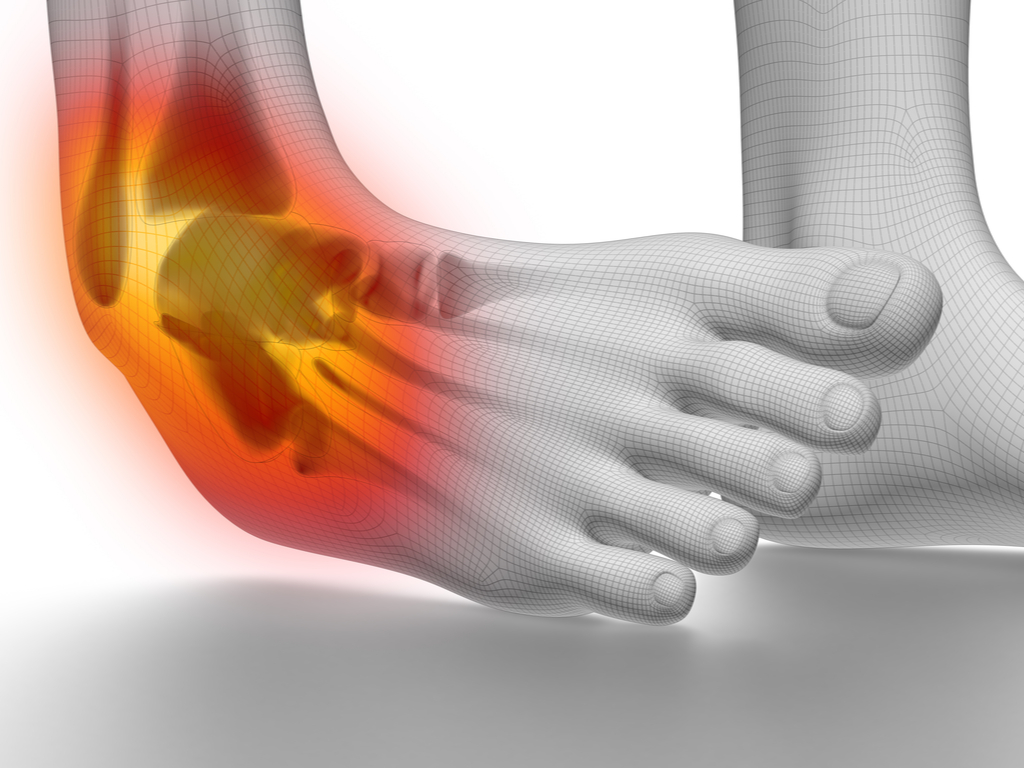
Symptoms of sprained ankle
Symptoms of sprained ankle include:
- pain
- swelling
- stiffness
- tenderness
- loss of movement in the ankle
Causes of sprained ankles
Your foot structure can be a predisposing factor to your susceptibility to sprained ankles. An experienced podiatrist can give you a comprehensive biomechanical assessment to assess that susceptibility. You may be prescribed an orthotic insole as part of your treatment plan. An orthotic insole can to help correct overpronation, where a foot rolls in during gate or supination, where a foot rolls out during gate, which may stress and strain the ankle and cause instability.
A sprained ankle can increase your risk of re-injury as much as 40-70%, but carefully following the rehabilitation advice of an experienced podiatrist may help lower that risk.
Treatment of sprained ankles
Immediate treatment for an ankle sprain is important to manage pain and reduce swelling. PEACE & LOVE is a protocol for effective injury management.
For the first 24–72 hours, follow PEACE:
P – Protect E – Elevate A – Avoid anti-inflammatories C – Compress E – Educate
After the first few days, your injury needs LOVE:
L – Load O – Optimism V – Vascularisation E – Exercise
Speak to an experienced podiatrist or medical professional for a detailed explanation of how to apply these principles to your specific injury.
Diagnosis and Recovery
What feels like a simple sprain can involve a fracture, muscle tear, or over-stressed tendon. To ensure a correct diagnosis and rule out bone involvement, you may require diagnostic imaging such as an X-ray, Ultrasound, CT, or MRI scan.
Full recovery from an ankle sprain aims to restore the normal range of motion to the joint and strengthen the ligaments and supporting muscles. Targeted rehabilitation exercises are important to restore balance (proprioception) and help prevent a recurrence of the injury.
If you have suffered from an ankle injury, you should see an experienced podiatrist who can diagnose your condition and give appropriate treatment.
Treatments can include:
- footwear advice
- heel pads
- self-help advice
- tailored exercise and stretching regimes
- orthotic insole
You may be prescribed an orthotic insole as part of your treatment plan. An orthotic insole can to help correct overpronation, where a foot rolls in during gate or supination, where a foot rolls out during gate, which may stress and strain the ankle and cause instability. A bespoke orthotic insole can also support and cushion the foot, reducing pain on impact when walking and running.
Call the Clinic for an appointment
Rachel Miller is a highly experienced podiatrist specialising in biomechanics who sees many patients for sprained ankles. Her clinic, Highgate Podiatry, is in Highgate Village, 14 Pond Square, N6 6BA, London. Clinics are held every Wednesday, Thursday, Friday and Sunday. Please contact the clinic for an appointment on 020 8348 5553. For the clinic’s address, map and directions see the Contact page and for information about orthotic insoles and biomechanics see the Biomechanics page.
Links to Services:
Links to Conditions Treated Include:
- Achilles tendinopathy
- Ankle fractures
- Ankle injuries
- Arthritis
- Back pain
- Bunions
- Corns/Calluses
- Diabetic care
- Flat feet
- Fungal toenail/athlete’s foot
- Haglund’s deformity
- Hammer toe and mallet toe
- Heel pain
- High arches
- Hypermobility
- Ingrown toenail
- In-toeing, toe walking, curly toes
- Knee injuries
- Metatarsalgia
- Morton’s neuroma
- Osgood-Schlatter disease
- Overuse injuries
- Patella tendinopathy
- Patellofemoral pain syndrome
- Plantar fasciitis
- Sever’s disease
- Sprained ankles
- Stress fractures
- Tarsal tunnel syndrome
- Toenails


